Written by
Federer Foundation
15 April 2026
Towards sustainable, movement-friendly residential environments
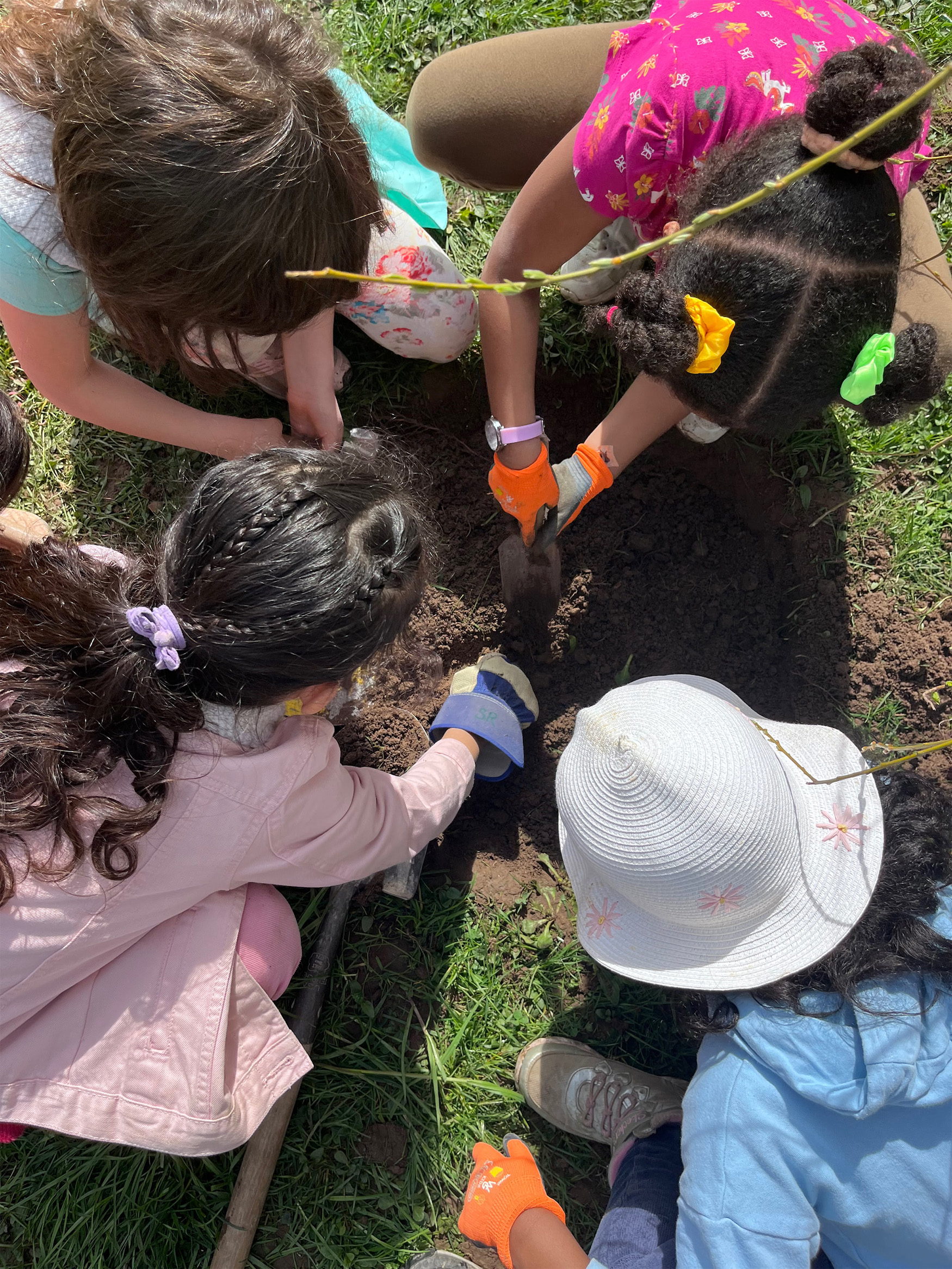
In Switzerland, our work on early physical development has reinforced a simple truth: children need space to move and play close to home. Since 2022, through the Early Moves initiative and in partnership with SpielRaum, we have supported improvements to outdoor residential spaces and provided practical guidance to support key decision-makers such as municipalities and property owners as they sustainably embed child-friendly spaces.
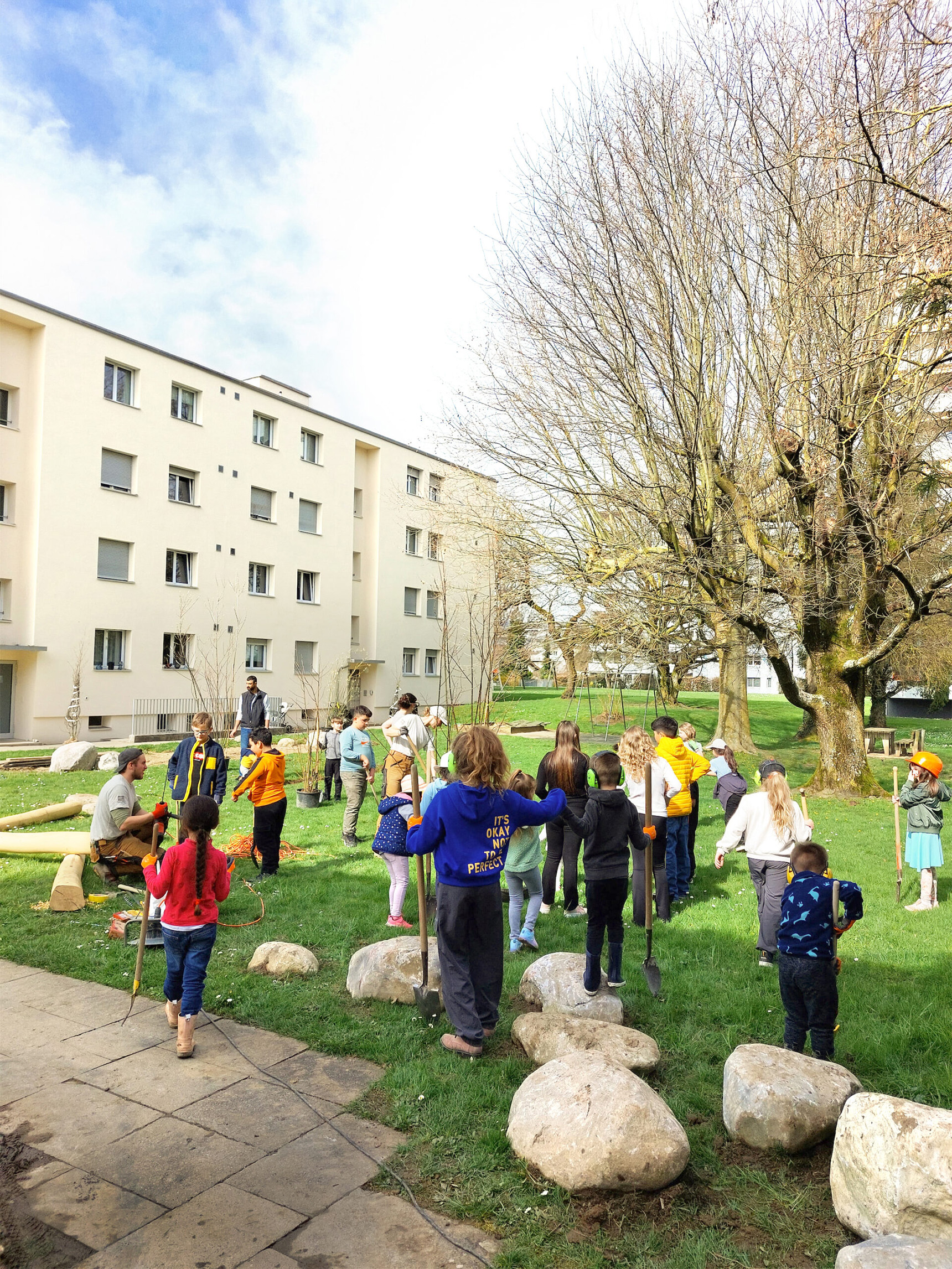
Children making their residential area more play-friendly on a participatory
construction site in Suhr, Switzerland © SpielRaum
However, one-off projects alone cannot change the broader conditions shaping children’s daily lives. Many children today spend less time outdoors, particularly in dense urban areas where safe, accessible play spaces are limited. The spaces just outside children’s homes offer great opportunity.
Our focus has therefore shifted from isolated improvements to long-term systems change. At municipal level, we support stronger planning and zoning standards for play-friendly residential areas. At property level, we promote child-friendly house rules that clearly allow outdoor play. By building on existing policies and local expertise, this approach aims to make child-friendly environments the norm for generations to come.
What we learned:
- 1
System-level integration
Lasting impact requires system-level integration rather than stand-alone projects. Sustainable change happens when approaches are embedded within existing policies, institutional structures and planning processes. - 2
The role of political alignment
Alignment with government priorities accelerates adoption and scale. When initiatives support national and local ambitions, ownership strengthens and long-term uptake becomes more likely. - 3
Strengthening systems from within
Strong institutional partnerships are essential for sustainability. Working through public systems and established actors reduces reliance on external programmes and builds durable capacity. - 4
Locally led, locally relevant
Context matters. Solutions must be locally relevant and shaped by those who implement and experience them to ensure credibility, effectiveness and long-term viability. - 5
Creating lasting change
Sustainable change takes time. Trust, patience and consistent investment are necessary to move from pilot efforts to embedded, systemic practice.